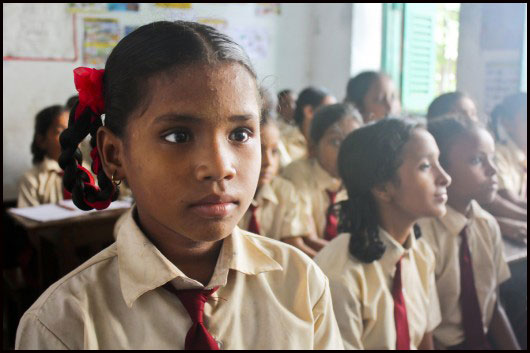
Women make up half of the world’s population and yet represent 70 percent of the world’s poor. Women work two-thirds of the world’s working hours, produce half of the world’s food, but earn only ten percent of the world’s income and own less than one percent of the world’s property.
Girls born into poverty are subject to abandonment and left to die through the practice of female infanticide. As youngsters, girls in developing countries are far less likely to complete even primary education because they are required to carry water, work in the fields, or start caring for the household. As adolescents, impoverished girls are all too often forced into marriage, sold into slavery, or sexually assaulted. The number-one cause of death of girls 15-19 is childbirth.
During their reproductive years, women in many countries have no say over how many children they will have, or how often. Half a million women will die every year giving birth. One woman in five is a victim of rape or attempted rape during her lifetime. Gender-based violence kills or injures more women than traffic accidents and malaria combined.
Yet women and girls around the world are standing up. From Malala Yousafzai, the young Pakistani girl who was shot in the face but not intimidated from attending school, to Somaly Mam, the Cambodian sex trade survivor who has become a champion for ending human trafficking, to Ellen Johnson Sirleaf, the first female president of Liberia, who has stabilized her war-torn country and won the 2011 Nobel Peace Prize, women are claiming their rights as equals in a world that too often values them less.
Facts and figures are from Global Citizen, Ten Times Ten, LLC, World Health Organization, UNICEF, The World Bank, UNESCO, UNIFEM


No comments yet.